Every business wants to grow, improve efficiency and achieve long-term success. However, understanding whether a business is moving in the right direction requires more than simply looking at revenue or customer numbers.
Successful businesses need reliable information to evaluate their performance, identify opportunities and make informed decisions.
Business performance measurement provides valuable insights into how an organisation operates and where improvements may be needed.
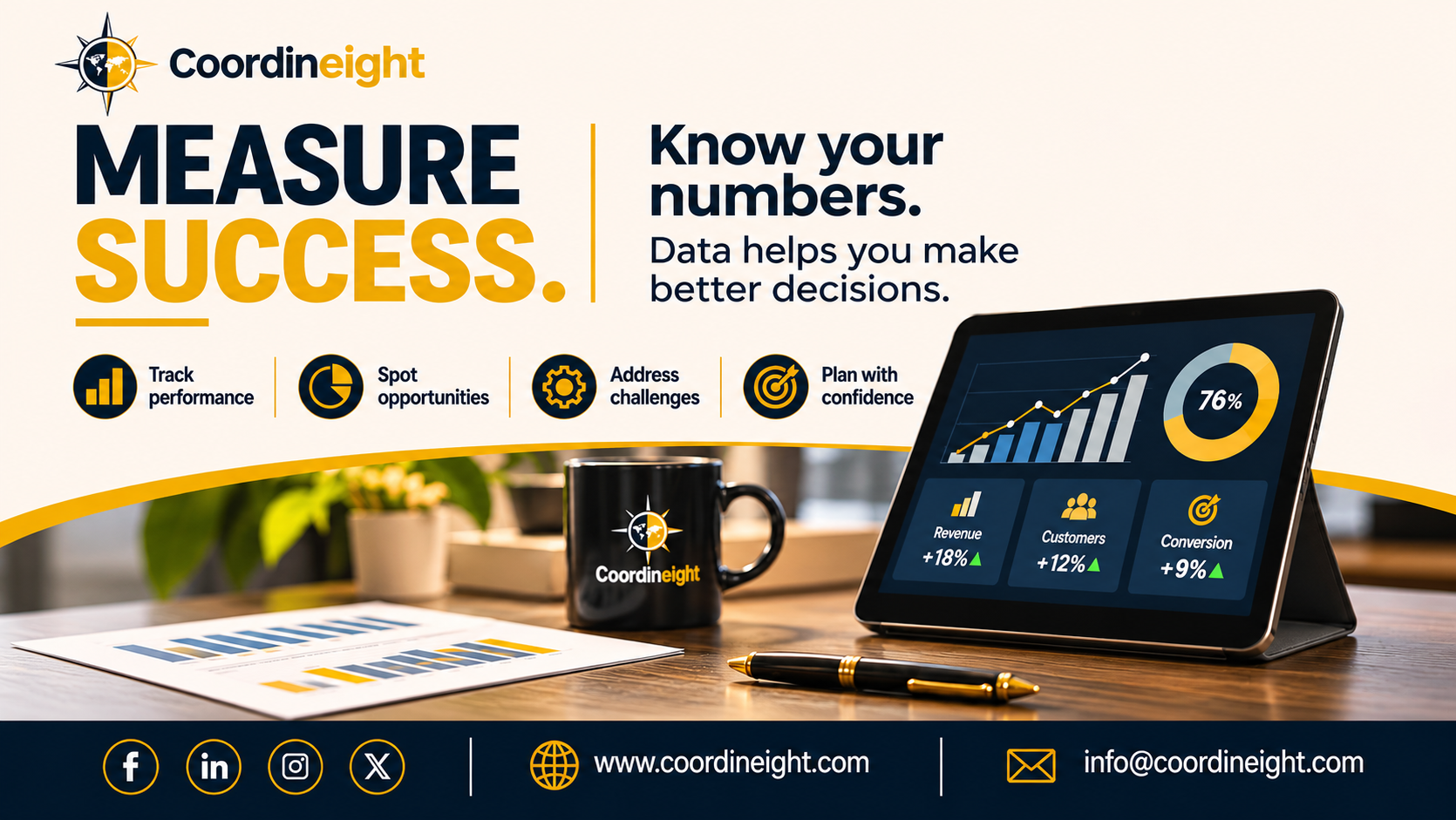
By monitoring the right metrics, businesses can make better decisions, respond to challenges and develop strategies that support sustainable growth.
What Is Business Performance Measurement?
Business performance measurement is the process of tracking and evaluating important indicators that reflect how effectively an organisation is achieving its objectives.
These indicators, commonly known as key performance indicators (KPIs), help businesses assess different aspects of their operations.
Depending on the organisation, performance metrics may include:
- Revenue and profitability.
- Customer acquisition and retention.
- Operational efficiency.
- Employee productivity.
- Sales conversion rates.
- Customer satisfaction.
Monitoring these indicators allows businesses to understand their current position and determine whether their strategies are delivering the desired results.
1. Track Business Performance
Tracking performance is one of the most important steps towards achieving business goals.
Without clear measurements, businesses may struggle to determine which activities are producing results and which require improvement.
For example, a company experiencing increased sales might assume that its overall performance is improving. However, if operating expenses are increasing faster than revenue, profitability could be declining.
Monitoring multiple performance indicators provides a more complete picture of business health.
Businesses should establish measurable goals and review their progress regularly to ensure that daily activities remain aligned with broader objectives.
2. Identify New Business Opportunities
Business data does more than reveal past performance. It can also help organisations recognise opportunities for future growth.
By analysing customer behaviour, sales trends and market demand, businesses can identify areas where additional investment or strategic adjustments may be beneficial.
For example, performance data might reveal that a particular product consistently attracts new customers or that a specific marketing channel generates stronger engagement.
These insights can help businesses make more informed decisions about where to direct their resources.
Rather than relying entirely on assumptions, organisations can use evidence to evaluate potential opportunities and prioritise initiatives with promising results.
3. Address Challenges Before They Escalate
Every business encounters challenges, including rising costs, operational delays, changing customer expectations and increased competition.
Regular performance monitoring can help organisations identify warning signs before these issues become more difficult to manage.
For example, declining customer satisfaction scores may indicate service delivery problems, while increasing operational expenses could highlight inefficiencies within existing processes.
Recognising these trends early allows businesses to investigate potential causes and take corrective action.
Performance measurement also encourages accountability by helping teams understand where improvements are needed and how their work contributes to organisational goals.
4. Make Better Business Decisions
Business decisions often involve uncertainty. Whether an organisation is considering expansion, introducing a new service or adjusting its marketing strategy, reliable information can improve the decision-making process.
Data-driven decision-making involves using relevant information to evaluate options and guide strategic choices.
For example, a business considering opening a new location could examine customer demand, operating costs and historical sales performance before committing resources.
Although data cannot eliminate every risk, it can help decision-makers better understand potential outcomes.
Combining performance insights with industry knowledge and practical experience creates a stronger foundation for business planning.
5. Set Realistic Goals and Measure Progress
Clear goals give businesses direction, but those goals must also be measurable.
Setting specific targets allows organisations to evaluate whether their strategies are working and determine when adjustments are necessary.
For example, instead of simply aiming to improve customer engagement, a business could establish a target to increase qualified website enquiries by 15% over six months.
Progress towards that target can then be monitored through relevant performance indicators.
Businesses can improve their goal-setting processes by:
- Establishing clear and measurable objectives.
- Selecting KPIs that align with business priorities.
- Reviewing results at regular intervals.
- Comparing actual performance against established targets.
- Adjusting strategies based on the findings.
This approach helps organisations maintain focus while remaining flexible enough to respond to changing circumstances.
6. Build a Culture of Continuous Improvement
Performance measurement should not be limited to financial reporting or management meetings.
When businesses consistently evaluate their results, they create opportunities for continuous improvement across different departments.
Teams can use performance insights to refine processes, strengthen communication and identify more efficient ways of working.
For example, reviewing project completion times may reveal opportunities to improve workflow coordination, while customer feedback could highlight areas where service delivery needs attention.
Encouraging employees to understand relevant performance indicators can also strengthen collaboration and accountability.
Over time, small improvements across multiple business functions can contribute to meaningful organisational progress.
Turning Business Data Into Meaningful Action
Collecting information is only the beginning. The real value of business performance measurement comes from using that information to guide action.
Businesses should focus on metrics that are relevant to their objectives rather than attempting to measure everything.
Regular performance reviews, clear reporting processes and open communication can help ensure that important insights are translated into practical improvements.
Organisations should also consider both quantitative data, such as revenue and conversion rates, and qualitative information, such as customer feedback and employee experiences.
Combining these perspectives provides a more balanced understanding of business performance.
Measure What Matters for Sustainable Business Growth
Long-term business success requires more than ambition. It requires clear objectives, informed decisions and a willingness to adapt.
By tracking performance, identifying opportunities, addressing challenges and setting measurable goals, businesses can develop a clearer understanding of their progress.
Effective performance measurement helps organisations move beyond assumptions and make decisions supported by meaningful insights.
Ultimately, knowing your numbers allows you to understand where your business stands today and plan more confidently for tomorrow.
Build a Stronger Business With Coordineight
At Coordineight, we recognise the importance of strategic planning, operational efficiency and informed business decisions.
Understanding business performance is an important step towards identifying opportunities, improving processes and creating lasting value.
Ready to explore new opportunities for business growth?
Visit www.coordineight.com to learn more about Coordineight and discover how a strategic approach can support your business objectives.