
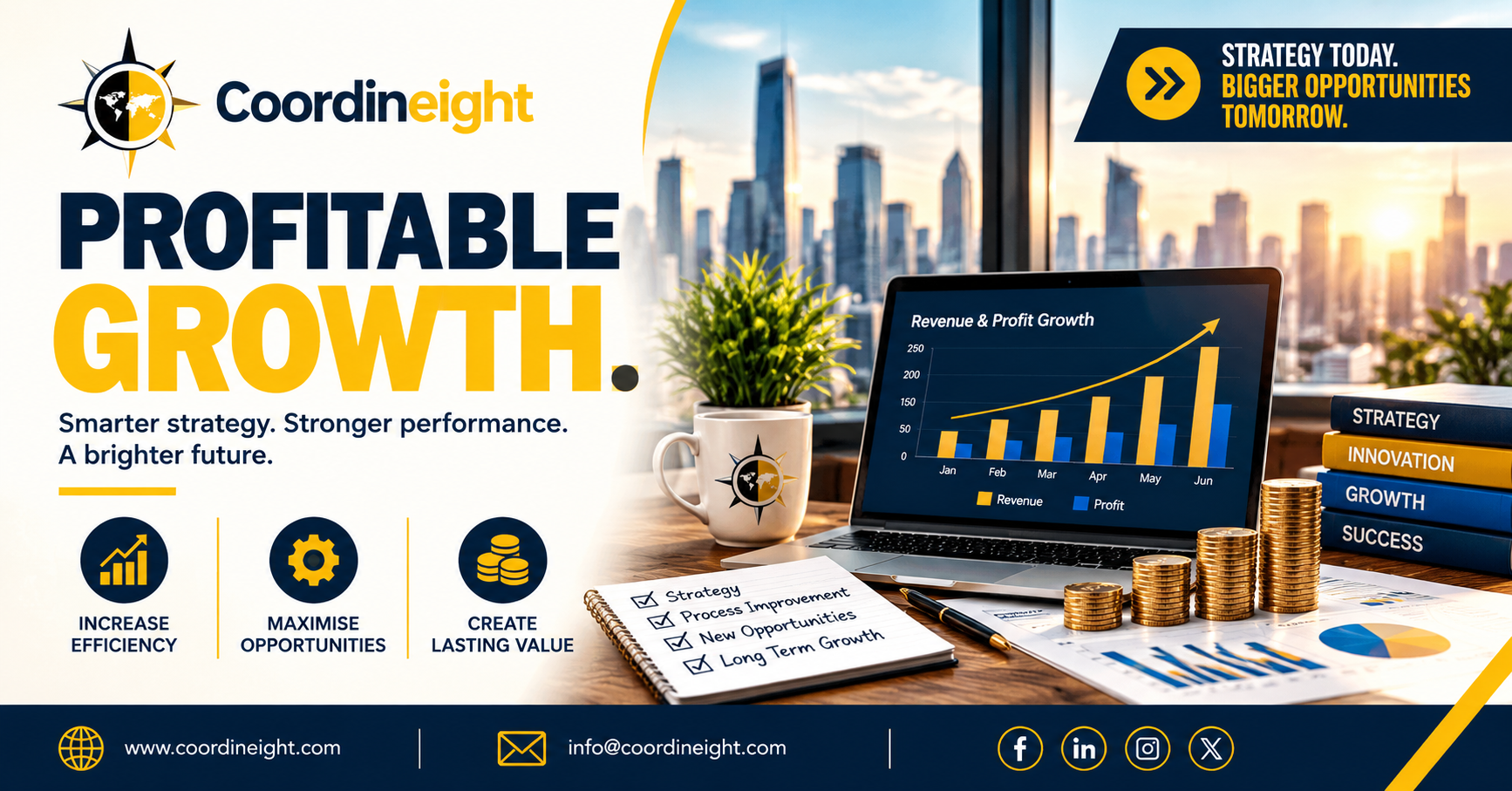
Profitable growth is about more than increasing revenue. A successful business needs the right strategy, efficient operations, strong customer relationships and a clear understanding of where its resources create the greatest value.
For growing businesses, the challenge is finding the right balance between expansion and profitability. With a practical approach, organisations can identify new opportunities, improve performance and build a stronger foundation for long-term success.
In this guide, we explore practical strategies businesses can use to increase efficiency, maximise opportunities and create lasting value.
What Does Profitable Growth Mean?
Profitable growth occurs when a business increases its revenue while maintaining healthy margins and controlling costs. Instead of focusing exclusively on sales, it considers how effectively a company converts its resources into sustainable financial results.
A business can experience rapid growth without becoming more profitable. Rising operating costs, inefficient processes and poor resource allocation can reduce the benefits of increased revenue.
A sustainable growth strategy focuses on building a business that is both commercially successful and operationally efficient.
1. Set Clear and Measurable Business Goals
Every successful growth strategy starts with a clear understanding of what the business wants to achieve.
Your objectives might include entering a new market, increasing customer retention, improving profit margins, expanding your service offering or strengthening operational performance.
Establish measurable targets and review them regularly. Tracking revenue, operating expenses, customer acquisition costs and profit margins helps leadership teams understand whether their growth initiatives are delivering meaningful results.
Clear objectives also help employees understand their priorities and how their work contributes to the wider business.
2. Improve Operational Efficiency
Operational efficiency plays a significant role in profitable growth. When processes are unnecessarily complicated, businesses can lose time, money and valuable resources.
Review your existing workflows to identify repetitive tasks, unnecessary expenses, communication gaps and areas where delays occur.
Consider introducing appropriate technology, automating routine activities and improving collaboration between departments. Even small process improvements can reduce costs and free up resources for more valuable work.
The objective is not simply to do more with less. It is to help your business operate more effectively while maintaining service quality.
3. Identify the Right Growth Opportunities
Not every opportunity is right for every business. Expanding into a new market or launching another service can create value, but only when the opportunity aligns with your capabilities and commercial objectives.
Before making a significant investment, evaluate customer demand, market conditions, competition, implementation costs and potential returns.
Speak with existing customers, analyse industry developments and examine the performance of your current products or services.
Prioritising opportunities with strong commercial potential allows your business to focus its resources where they are most likely to deliver sustainable returns.
4. Make Better Decisions With Business Data
Reliable information helps businesses make more informed decisions about growth and profitability.
Rather than relying exclusively on assumptions, monitor the indicators that influence business performance. These might include sales conversion rates, customer retention, operating costs, project profitability and employee productivity.
Regular reporting can reveal patterns that might otherwise go unnoticed. For example, a service generating substantial revenue may deliver relatively little profit if its delivery costs are too high.
By understanding these relationships, businesses can make more confident decisions about pricing, investment and resource allocation.
5. Strengthen Customer Relationships
Sustainable growth depends on delivering value that encourages customers to return and recommend your business to others.
Understand your customers’ priorities, communicate clearly and maintain consistent service standards. When customers feel understood and receive dependable service, they are more likely to develop long-term relationships with your organisation.
Gather feedback, respond to concerns promptly and look for opportunities to improve the customer experience.
Retaining existing customers can also help reduce the pressure to continually acquire new customers, supporting more predictable revenue and healthier long-term growth.
6. Invest in Your People and Processes
Your employees are central to how effectively your business grows. Skilled, motivated teams can improve productivity, strengthen customer relationships and help organisations adapt to changing market conditions.
Provide appropriate training, establish clear responsibilities and encourage collaboration across departments.
At the same time, make sure your internal processes can support increasing demand. Growing sales without the systems, people and resources required to deliver consistently can create operational problems.
Investing in people and processes early can help your business expand without compromising quality.
7. Manage Costs Without Limiting Progress
Cost management is essential, but reducing expenditure without considering its wider impact can damage long-term performance.
Instead of making indiscriminate cuts, identify which expenses contribute directly to business value and which create unnecessary overheads.
Review supplier agreements, resource utilisation, operational procedures and recurring expenses. Look for opportunities to improve efficiency while protecting the activities that support customer satisfaction and future growth.
A thoughtful approach to cost management helps maintain profitability without sacrificing the capabilities your business needs to succeed.
8. Review Performance and Adapt Your Strategy
Business conditions change, and a growth strategy should evolve accordingly.
Schedule regular performance reviews to assess progress against your objectives. Identify which initiatives are delivering results, where resources are being underused and which areas require improvement.
Use these findings to adjust priorities and allocate resources more effectively.
A flexible approach allows your organisation to respond to new challenges and opportunities while maintaining a clear focus on profitability and long-term value creation.
Turning Business Challenges Into Opportunities
Profitable growth requires a combination of strategic planning, operational discipline and continuous improvement. Businesses that set clear goals, use data effectively, invest in their people and prioritise the right opportunities are better positioned to build sustainable performance.
At Coordineight, the focus is on helping businesses approach challenges strategically, improve efficiency and identify opportunities for meaningful progress.
By connecting strategy, people and performance, organisations can create a stronger foundation for growth and build lasting business value.
Ready to take the next step? Explore how a more strategic approach to business growth can help your organisation improve performance, maximise opportunities and move confidently towards its long-term goals.